Get Expert IT Solutions For Your Business – Natural Group

-91 9090909090

support@nscspl.in

HTML (Front-End Technology)

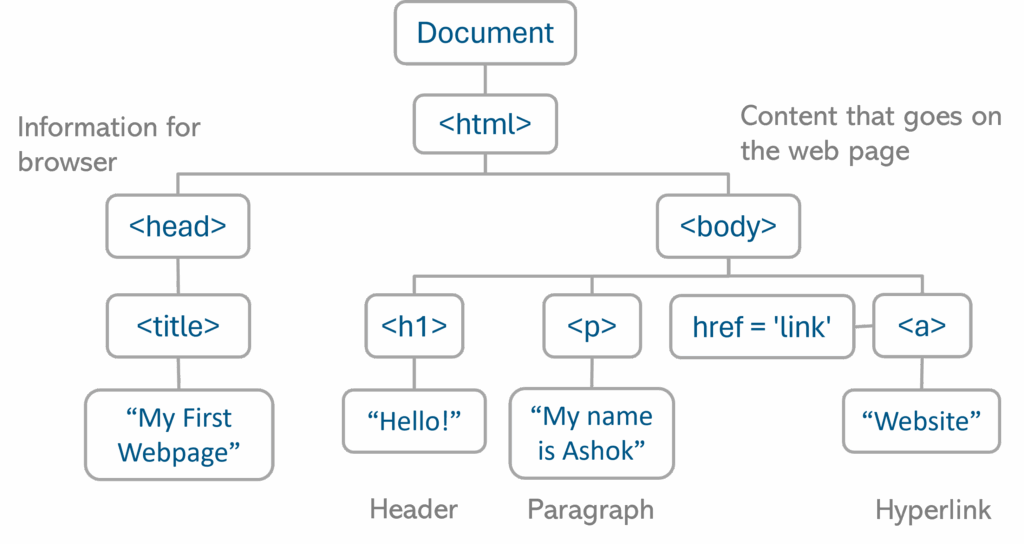
In the development of our ERP system, we have utilized HTML in a very important way. HTML (HyperText Markup Language) is the fundamental language for structuring web pages, essential for designing user interfaces and presenting content.

By using HTML in the ERP system, we created user-friendly and interactive pages that make it easy for users to access and work with different modules within the system. Additionally, by integrating HTML with modern CSS and JavaScript, we enhanced the system’s functionality and overall look and feel.

Specifically, in our Tender module, we used HTML to design dynamic forms, data display tables, and responsive layouts that work well across various devices.

In this way, the integration of HTML has helped make our ERP system modern, scalable, and user-centric, assisting us in streamlining business processes effectively.

Why HTML is Essential for Modern ERP Systems:

HTML is the foundation of all web-based applications, including ERP systems. Its role goes beyond just displaying content; it enables the creation of structured, accessible, and interactive interfaces that users rely on daily.

In our ERP solution, HTML helps break down complex workflows into manageable screens and sections, making the system easier to learn and use. It also supports accessibility standards, ensuring that all users, including those with disabilities, can effectively operate the system.

By using semantic HTML elements, we improve the clarity and SEO of our ERP web pages, which is crucial for any web application integrated with external portals or documentation.

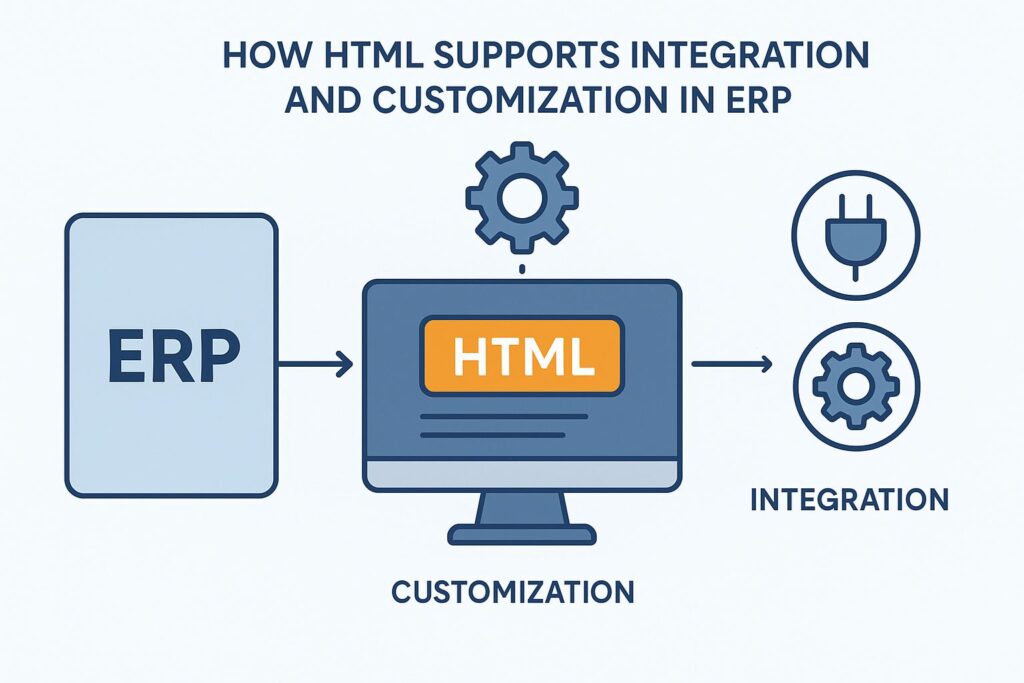
How HTML Supports Integration and Customization in ERP:

One of the key strengths of HTML is its compatibility with various technologies, which allows us to customize and integrate our ERP system flexibly.

We use HTML to embed forms, reports, dashboards, and interactive components that communicate with backend services and databases. This front-end structure makes it possible to update the interface or add new features without affecting the core ERP logic.

Additionally, HTML’s open standards ensure that our ERP system can easily integrate with other tools and platforms, providing a seamless experience for users who rely on multiple software solutions.

HTML Best Practices Followed in Our ERP Development

To ensure a high-quality user experience, we follow best practices in HTML development, including:

  • Writing clean, semantic code for better readability and maintenance.
  • Ensuring responsive design so the system works well on all devices.
  • Using proper form controls and validation to enhance data accuracy.
  • Optimizing page load speeds by minimizing unnecessary elements.
  • Incorporating accessibility features like ARIA roles and keyboard navigation support.

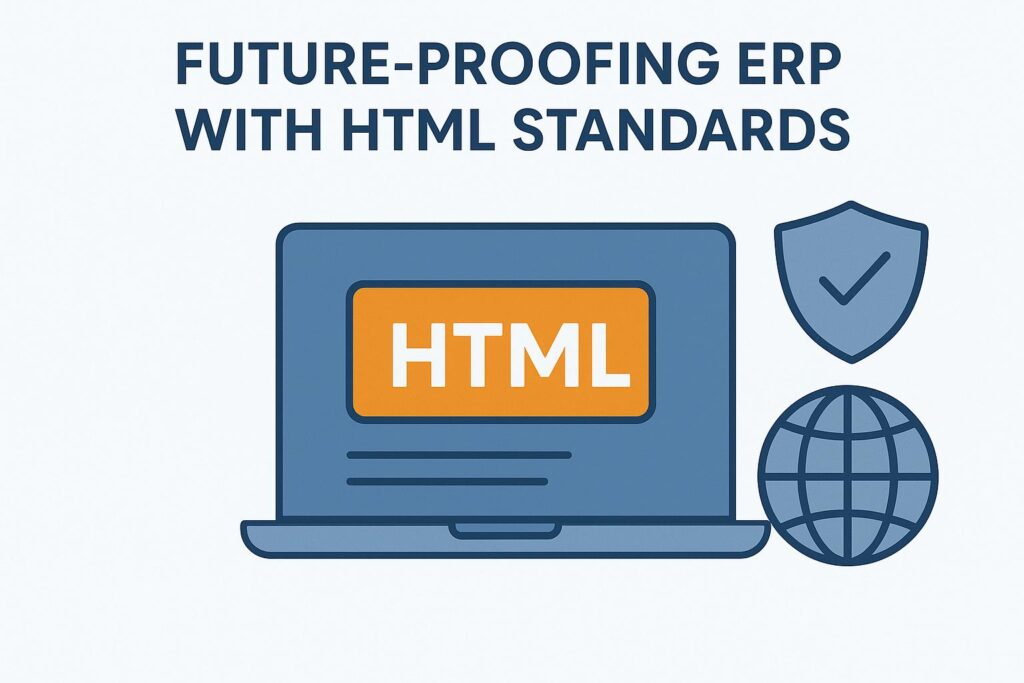
Future-Proofing ERP with HTML Standards

Following the latest HTML standards ensures our ERP system is future-proof and compatible with emerging technologies. This approach allows easy adoption of new web APIs, improved security features, and better performance optimizations. Moreover, adhering to standards makes it easier for our development team to maintain and upgrade the ERP system, reducing downtime and ensuring continuous improvement aligned with business goals.

Call Now Button