Get Expert IT Solutions For Your Business – Natural Group

-91 9090909090

support@nscspl.in

Spring Boot (Open-Source FrameWork)

Spring Boot is a robust framework built on the Spring ecosystem, designed to facilitate rapid development of scalable and production-ready applications. In this project, Spring Boot was utilized to develop the Tender module, enabling efficient and streamlined handling of tender processes. Its auto-configuration and embedded server capabilities allowed the creation of a stand-alone module with minimal configuration, ensuring faster development cycles and easier maintenance.

Furthermore, the flexibility of Spring Boot enabled seamless integration of the Tender Module into the existing ERP System, which is built using the Struts Framework. This integration bridges modern application development with legacy systems, enhancing the overall functionality and user experience of the ERP solution. The incorporation of Spring Boot has improved modularity, scalability, and future readiness of the enterprise applications.


Understanding Spring Boot:


Spring Boot is an open-source Java framework that simplifies the development of stand-alone, production-grade Spring-based applications. By eliminating the need for complex configurations, Spring Boot allows developers to focus on building business logic rather than dealing with boilerplate code. Its key features include:

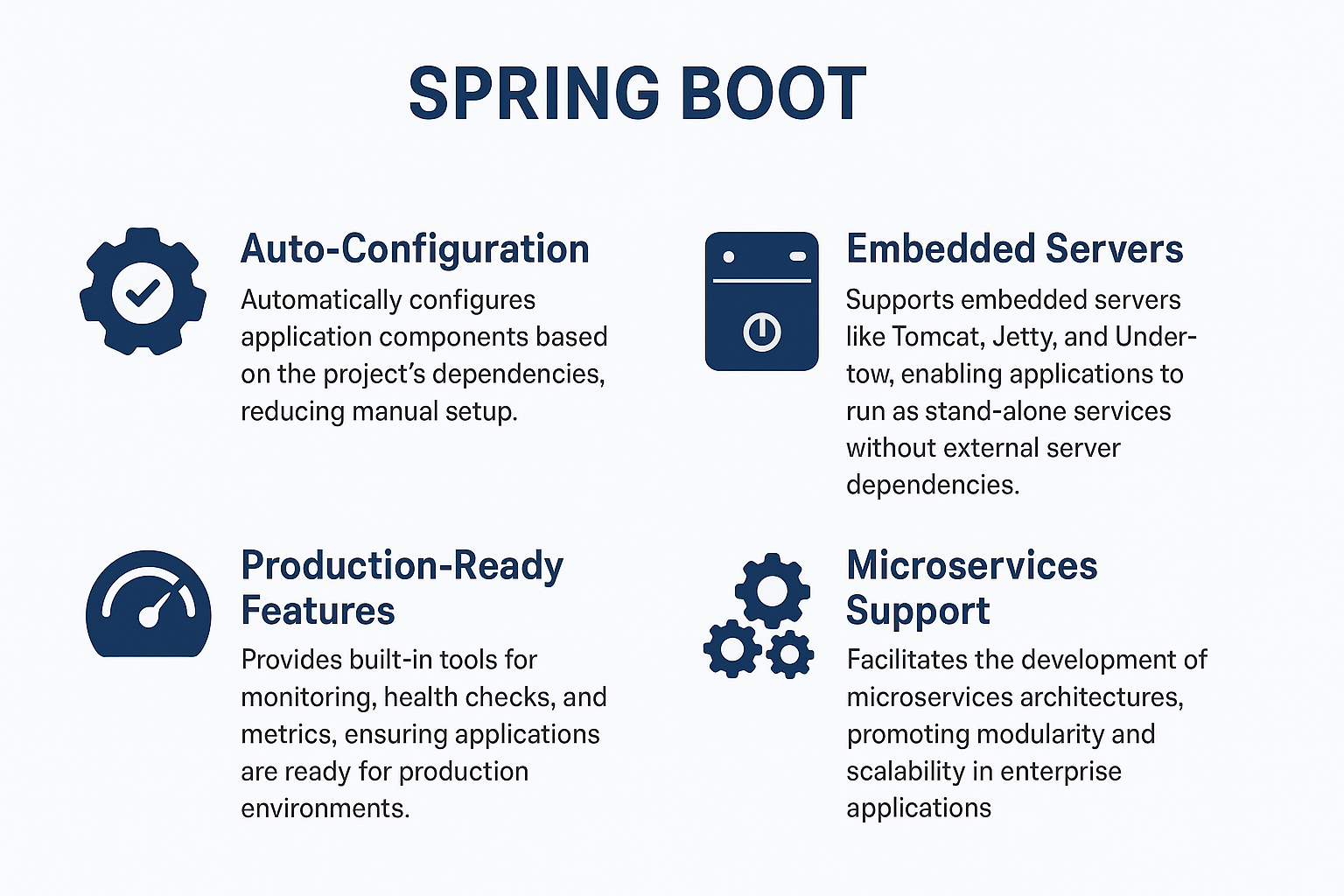
  • Auto-Configuration:  Automatically configures application components based on the project’s dependencies, reducing manual setup.

  • Embedded Servers: Supports embedded servers like Tomcat, Jetty, and Undertow, enabling applications to run as stand-alone services without external server dependencies.

  • Production-Ready Features: Provides built-in tools for monitoring, health checks, and metrics, ensuring applications are ready for production environments.

  • Microservices Support: Facilitates the development  of microservices architectures, promoting modularity and scalability in enterprise applications.

Benefits of Using Spring Boot:

Integrating Spring Boot into our development process offers several advantages:


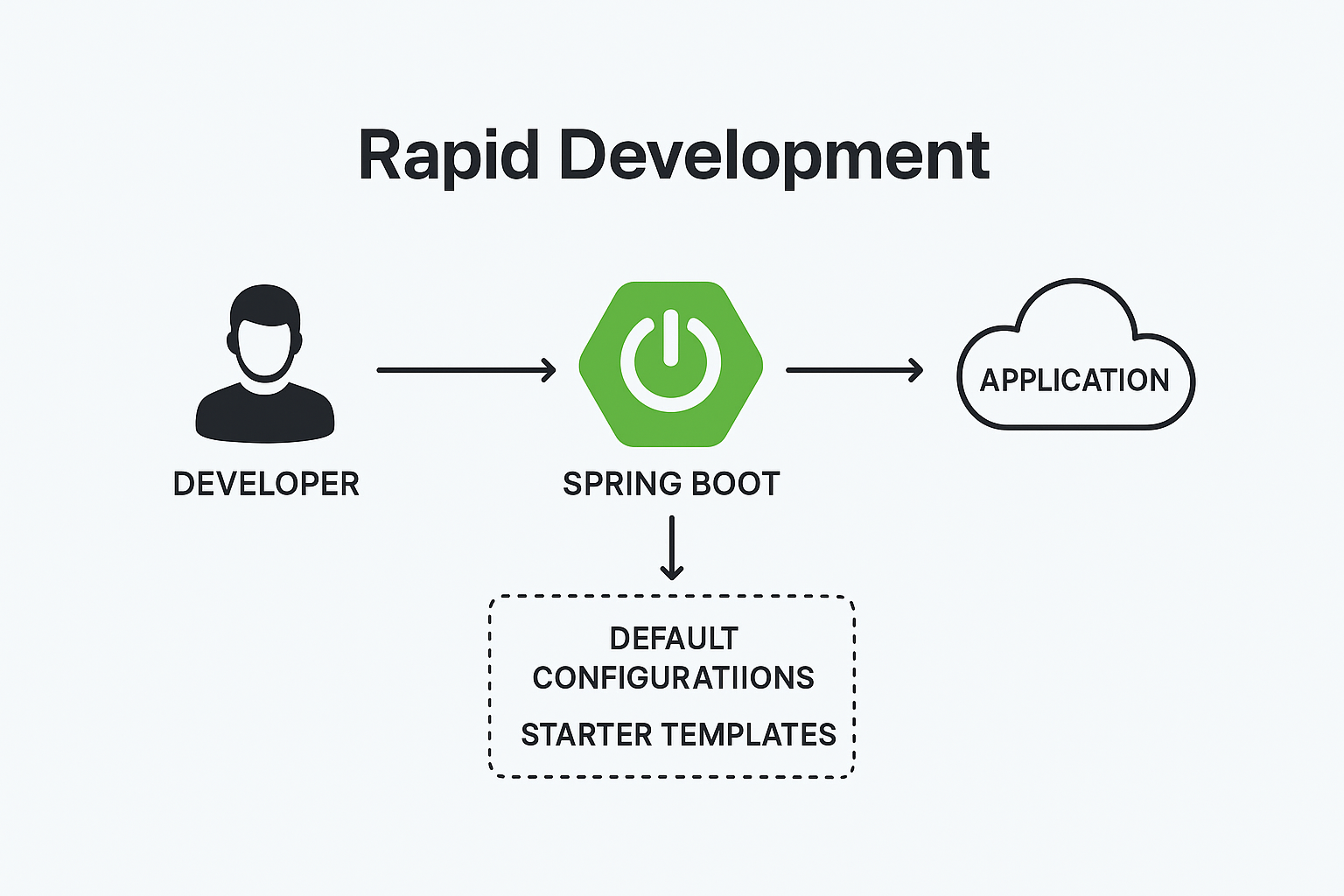
  • Rapid Development: Accelerates the development cycle by providing default configurations and starter templates, allowing for quicker prototyping and deployment.

  • Enhanced Productivity: Reduces the need for boilerplate code and manual configurations, enabling developers to focus on delivering business value.

  • Scalability and Flexibility: Supports the creation of scalable applications that can handle increased loads, making it suitable for growing enterprise needs.

  • Seamless Integration: Easily integrates with other Spring projects and third-party libraries, providing a cohesive development experience.

Integration of Spring Boot with the Tender Module

Integrating Spring Boot with the Tender module brings several enhancements:

  • Improved Performance: Spring Boot’s efficient resource management ensures that the Tender module operates at optimal performance levels, even under heavy loads.

  • Scalability: The modular nature of Spring Boot allows the Tender module to scale effortlessly, accommodating increasing numbers of users and tenders.

  • Maintainability: Spring Boot’s convention-over-configuration approach results in cleaner codebases, making the Tender module easier to maintain and extend.

  • Security:  With Spring Boot’s robust security features, the Tender module benefits from enhanced protection against potential threats and vulnerabilities.

Conclusion

The combination of Spring Boot and the Tender module represents a strategic advancement in our ERP system, offering a modern, efficient, and scalable solution to manage tendering processes. This integration not only streamlines operations but also positions our enterprise to adapt to future challenges and opportunities in the digital era.

Call Now Button